
Mold in Hotels: How to Check Your Room Before You Unpack
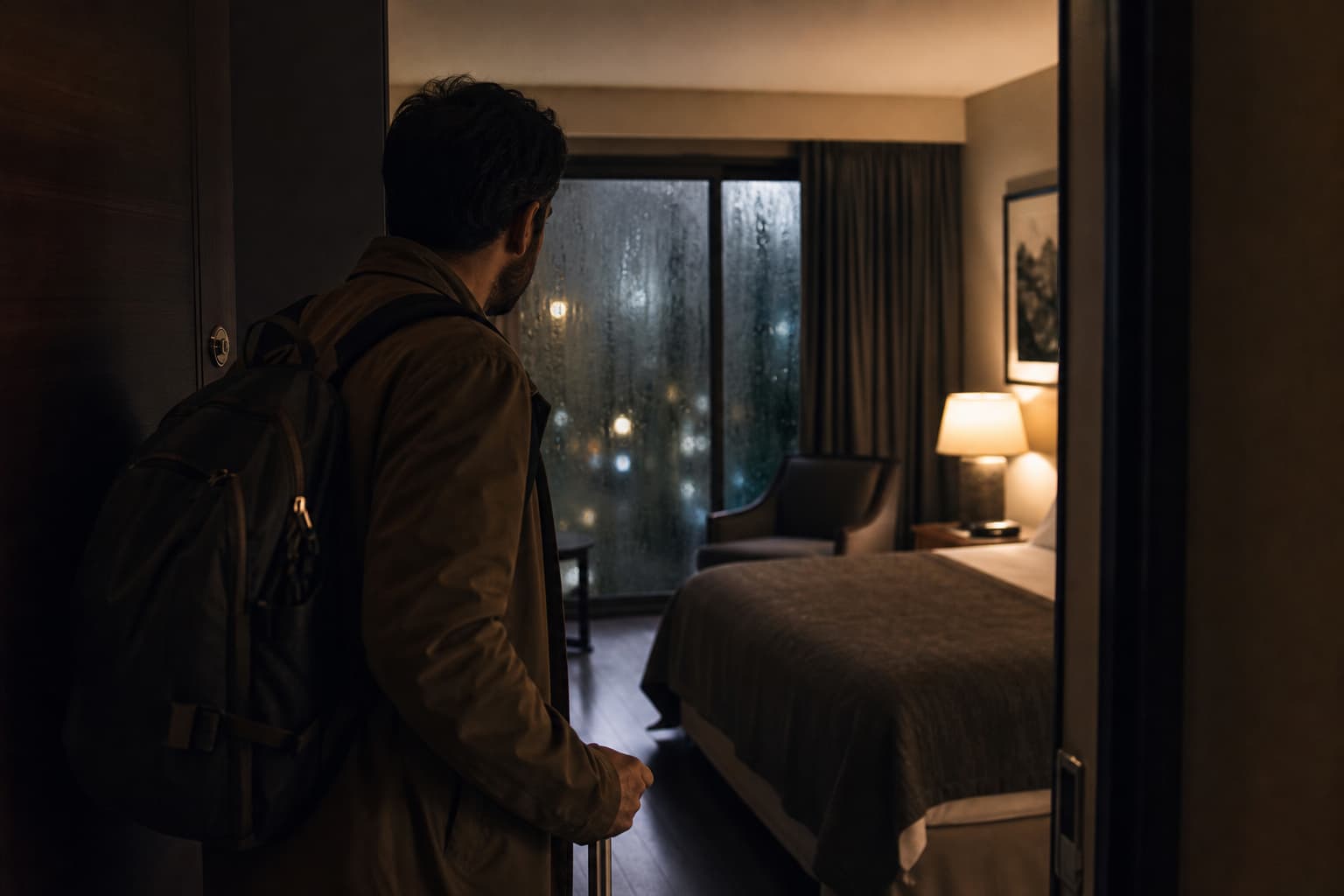
I used to love hotels.
The fresh sheets, the little coffee maker, the feeling of being somewhere new. Then I got sick from mold exposure in 2020, and everything about how I travel changed — including how I walk into a hotel room.
These days, the first thing I do when I open a hotel room door isn't toss my bag on the bed. It's take a deep breath. Literally. Because after three years of recovering from Chronic Inflammatory Response Syndrome (CIRS), I've learned that what you can't see in a hotel room can hurt you far more than what you can.
And here's the uncomfortable truth: hotels are some of the highest-risk buildings for mold growth. The combination of constant moisture from showers, infrequent deep maintenance, aging HVAC systems, and high occupancy turnover creates conditions where mold thrives — often behind walls, under carpets, and inside air handling units that guests never see.
Why Hotels Are a Hidden Mold Hotspot
Hotels face a unique set of challenges when it comes to indoor air quality:
Constant moisture. Dozens of showers running daily in a single building creates enormous humidity loads. If ventilation can't keep up — and in many older hotels, it can't — moisture accumulates in walls, ceilings, and ductwork.
Deferred maintenance. Hotels operate on tight margins. Fixing a slow leak behind a bathroom wall isn't visible to guests, so it often gets pushed down the priority list — sometimes for months or years. Meanwhile, mold colonies establish themselves and spread.
Sealed environments. Most modern hotel rooms have windows that don't open. You're breathing 100% recirculated air, filtered (or not) through the building's HVAC system. If that system has mold in its coils, drain pans, or ductwork, every room it serves is affected.
Carpet everywhere. Wall-to-wall carpet in hotel rooms acts like a moisture sponge, especially on ground floors or in humid climates. Spills, tracking in rain or snow, and condensation all get absorbed — and rarely fully dried before the next guest checks in.
High turnover, low inspection. Housekeeping teams are focused on visible cleanliness — making beds, wiping surfaces, restocking toiletries. They're not trained to spot early mold indicators, and most don't have time to check behind furniture or inside HVAC units between guests.
The 10-Minute Hotel Room Mold Check
I've done this hundreds of times now, and I've gotten it down to a reliable routine you can run before you even unpack. Here's exactly what I do:
1. The Smell Test (30 seconds)
The moment you open the door, pause and breathe in. Don't walk in yet — just stand in the doorway and inhale.
What you're looking for: A musty, earthy, or damp smell. Some people describe it as "old basement" or "wet cardboard." If the room has been sprayed with heavy air freshener or fragrance, that's actually a red flag — it may be covering something up.
If the smell hits you immediately, request a different room before you bring your luggage in.
2. Check the Bathroom (3 minutes)
This is ground zero. Go straight to the bathroom and inspect:
- Grout and caulking around the tub/shower. Black or dark spots in grout lines are often mold. Run your finger along the caulking at the base of the tub — is it soft, discolored, or pulling away from the wall?
- The ceiling above the shower. Look up. Any bubbling paint, dark spots, or discoloration? Hotels with poor bathroom ventilation will show it here first.
- Under the sink. Open the cabinet. Look for water stains, warped wood, or that telltale musty smell.
- The exhaust fan. Turn it on. Does it actually pull air? Hold a tissue up to it — if it doesn't get sucked toward the vent, it's not working. A non-functional bathroom exhaust fan in a hotel is a major red flag.
3. Inspect the HVAC Unit (2 minutes)
Most hotel rooms have a PTAC unit (that big box under the window) or a fan coil unit. This is where mold loves to hide.
- Turn the unit on and put your face near the output. Does the air smell musty or stale?
- If you can, pull out or lift the front filter panel. Look for dark buildup, dust caked with moisture, or visible mold on the coils or drip pan.
- Check around the unit on the wall and floor. Water stains or discoloration near the HVAC unit suggest condensate drainage problems.
4. Check the Carpet and Soft Surfaces (2 minutes)
- Walk the carpet in your socks or bare feet. Any damp spots, especially near the bathroom door, under windows, or around the HVAC unit?
- Get down and smell the carpet near the walls and under the bed. Yes, it looks strange. No, I don't care. This is your health.
- Look at the bottom of the curtains or drapes near windows — condensation can cause mold growth there.
- Check the upholstered furniture. Lift cushions if you can. Any musty odor?
5. Windows and Walls (2 minutes)
- Look at the window frame and sill. Any dark spots, peeling paint, or condensation residue?
- Scan the walls, especially corners and areas behind the headboard. You might need to pull the bed away slightly.
- Check the ceiling corners for any discoloration or water stains.
6. Pull Up Moldmap (1 minute)
Before your trip — or right there in the room — search the hotel on Moldmap. Check whether other guests have reported mold or air quality issues. Read the indoor air quality risk score. This is exactly why I built the platform: so you don't have to guess.
What to Do If You Find Mold
Don't panic — but don't ignore it either.
Request a room change immediately. Be specific: "I've found what appears to be mold growth in the bathroom / HVAC unit / carpet. I need a different room, preferably on a different floor and a different wing of the building." Different floor matters because mold in HVAC systems can affect entire zones.
Document everything. Take photos with timestamps. If you react to the room — headache, congestion, fatigue — note that too with the time and date. This matters if you need to dispute the charge or file a complaint later.
Leave a review on Moldmap. This is the single most valuable thing you can do for the next person. Every review adds to the community knowledge base and helps other health-conscious travelers make safer choices.
If you get sick, seek medical attention. Short-term mold exposure can trigger allergic reactions, asthma attacks, sinus infections, and in sensitive individuals, the beginning of a more serious inflammatory response. Don't brush off symptoms that start during a hotel stay.
How to Choose Mold-Safe Hotels Before You Book
Prevention beats inspection every time. Here's what I look for when booking:
- Newer construction or recently renovated. Buildings less than 10 years old or recently gut-renovated are generally lower risk — though not immune.
- Dry climate locations. Hotels in arid regions (Southwest US, for example) have inherently lower mold risk than those in humid coastal or tropical areas.
- Moldmap scores. This is the obvious one — but it's also the most powerful. A hotel with positive air quality reviews from the Moldmap community gives you data where before there was only guesswork.
- Avoid ground-floor and basement rooms. These are consistently higher risk for moisture intrusion and mold.
- Look for hotels that mention air quality. Some forward-thinking hotels are now marketing their HEPA filtration, fragrance-free policies, or air quality monitoring. These are good signs.
The Bigger Picture
Here's what frustrates me: hotels spend enormous amounts of money on thread count, lobby design, and bathroom amenities — all visible things. But the single most important factor in whether a guest has a healthy stay — the air they breathe for 8+ hours while they sleep — gets almost no attention.
That's changing. Slowly. And every time someone reports a mold issue, leaves a review, or chooses a hotel based on air quality data, it sends a signal to the industry: this matters.
You deserve to know what you're breathing when you check in. And now you have the tools to find out.
-justin
Moldmap helps people compare hotels, apartments, and rentals using community reports, public data, and Moldmap SensiScore. Search listings at moldmap.io.
This article is for informational purposes only and does not constitute medical advice. If you suspect mold exposure is affecting your health, please consult a healthcare professional experienced in environmental medicine.
Find your next stay
Browse thousands of hotels and rentals with community reviews and Moldmap SensiScore
Become a Member

