
Black Mold Symptoms: What Every Renter and Traveler Needs to Know
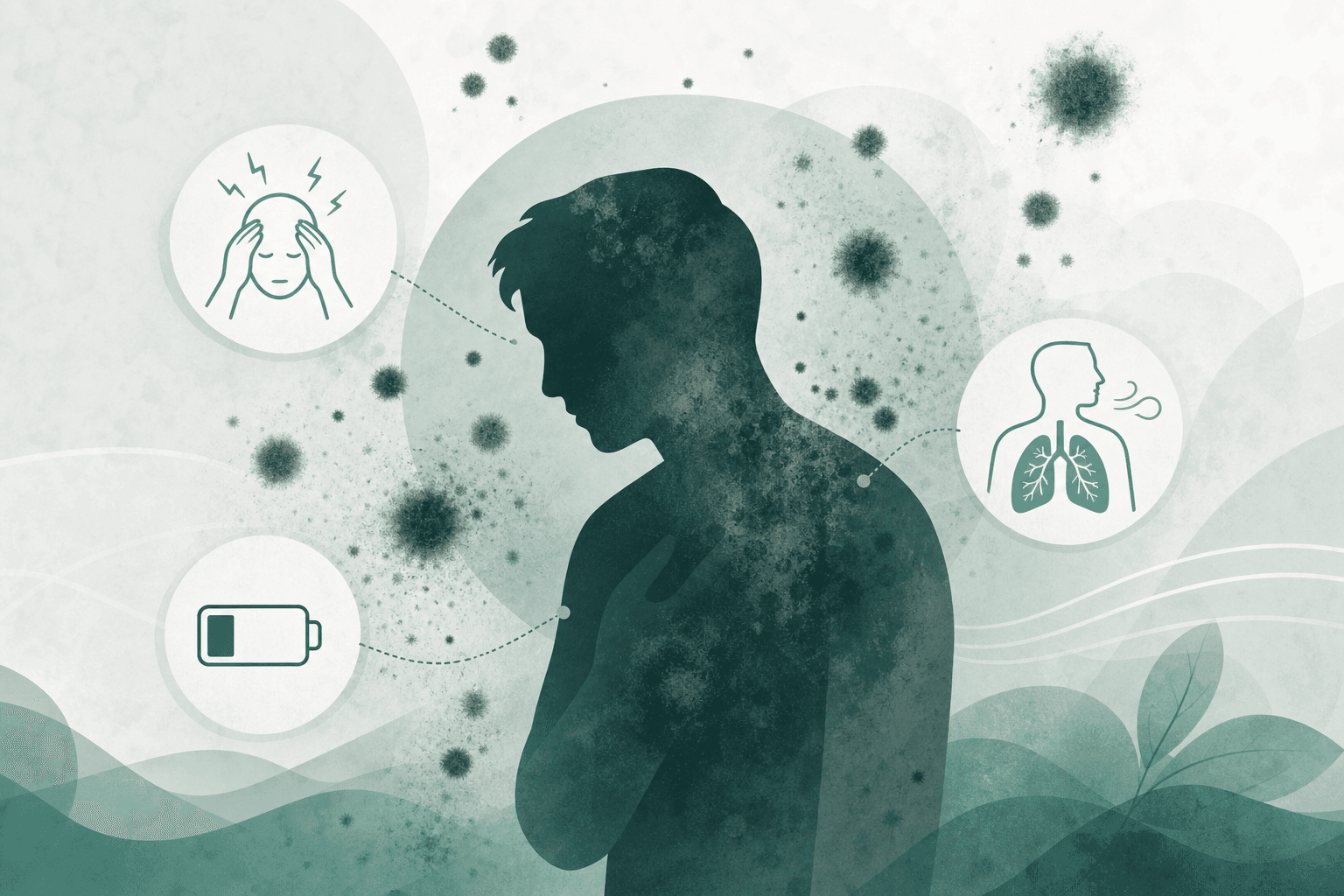
Nobody warned me about black mold symptoms.
When I started getting headaches, brain fog, and crushing fatigue in 2020, I went to doctor after doctor. I got blood tests, MRIs, referrals to specialists. Nobody asked me about my apartment. Nobody asked about the air I was breathing.
It took me over a year to connect the dots. The building I was living in had a hidden mold problem — and it was making me seriously, life-alteringly sick. I was eventually diagnosed with CIRS (Chronic Inflammatory Response Syndrome), and it took three years to recover.
I don't want that to happen to you. So here's what I wish I'd known about black mold symptoms — the real ones, not the myths you see on social media.
What Is Black Mold, Really?
When people say "black mold," they're usually referring to Stachybotrys chartarum, a dark greenish-black mold that grows on materials with high cellulose content — drywall, wood, paper, carpet backing — when they've been wet for an extended period.
But here's something important: mold color alone doesn't tell you how dangerous it is. There are thousands of mold species. Many are black or dark-colored. Not all of them produce the same toxins. And some lighter-colored molds (like Aspergillus and Chaetomium) can be just as problematic as Stachybotrys.
What actually matters is:
- Whether the mold is producing mycotoxins (toxic metabolites)
- The concentration of mold spores in the air you're breathing
- Your individual susceptibility (genetics play a huge role — roughly 25% of the population carries HLA gene variants that make them more vulnerable)
- The duration of exposure (weeks and months of low-level exposure can be worse than a brief high-level event)
The Symptoms of Mold Exposure
Mold exposure symptoms are frustratingly vague, which is why they get misdiagnosed so often. They overlap with dozens of other conditions — chronic fatigue syndrome, fibromyalgia, depression, anxiety, "just stress."
Here's what the research and the clinical experience of doctors who treat mold illness tell us:
Neurological Symptoms
- Brain fog — difficulty concentrating, finding words, or completing tasks that used to be easy
- Memory problems — forgetting conversations, losing your train of thought
- Headaches — often daily, sometimes migraine-level
- Dizziness or vertigo
- Tingling or numbness in extremities
- Light sensitivity
- Mood changes — anxiety, depression, irritability that feels disproportionate
This was my experience. The brain fog was the worst part. I went from being a sharp, focused person to feeling like I was thinking through wet concrete. It was terrifying.
Respiratory Symptoms
- Chronic cough
- Shortness of breath
- Wheezing
- Sinus congestion that never fully clears
- Frequent sinus or respiratory infections
- Postnasal drip
Systemic & Inflammatory Symptoms
- Crushing fatigue — not "tired," but the kind of exhaustion where climbing stairs feels like running a marathon
- Joint and muscle pain — often migrating, without a clear injury
- Morning stiffness
- Night sweats
- Temperature dysregulation — feeling too hot or too cold without reason
- Increased thirst and frequent urination (due to hormone disruption)
Immune & Digestive Symptoms
- Food sensitivities that seem to appear out of nowhere
- Digestive issues — bloating, nausea, abdominal cramps
- Getting sick more often — the immune system is both overactivated and exhausted
- Skin rashes or hives
- Eye irritation — red, watery, or itching eyes
The Pattern to Watch For
The key pattern isn't any single symptom — it's multiple symptoms across multiple systems that started around the same time or gradually worsened after moving to a new place, starting a new job, or spending time in a specific building.
Ask yourself: Did these symptoms start or get worse after I moved? After I started working in a new office? When I'm at home vs. when I'm away?
If your symptoms improve when you travel or stay somewhere else for a few days, that's one of the strongest indicators that your environment is the problem.
Mold Symptoms vs. Mold Allergies: What's the Difference?
This is an important distinction that gets blurred a lot.
Mold allergies are an IgE-mediated immune response — your body treats mold spores like pollen. Symptoms are typically respiratory: sneezing, runny nose, itchy eyes, coughing. These affect about 10-20% of the population and are usually manageable with antihistamines and reduced exposure.
Mold toxicity / CIRS is a fundamentally different mechanism. It's not an allergy — it's a chronic inflammatory response triggered by biotoxins (mycotoxins, endotoxins, beta-glucans, and other inflammagens) that your body can't properly clear. This involves the innate immune system, not the adaptive immune system. It affects multiple organ systems simultaneously and doesn't respond to antihistamines.
If you have mold allergies, you sneeze and your nose runs. If you have mold toxicity, you might have 15+ symptoms across your brain, joints, gut, and immune system that make you feel like your entire body is breaking down.
Both are real. Both matter. But they require different approaches.
What to Do If You Think Mold Is Making You Sick
Step 1: Document Your Symptoms
Start a simple log. Date, symptoms, severity (1-10), and where you spent most of your time that day. After 2-3 weeks, patterns often become obvious.
Step 2: Inspect Your Environment
Use the apartment mold inspection checklist I put together. Check under sinks, around windows, in bathrooms, and near HVAC vents. Use your nose — a musty smell is a real indicator.
Step 3: Test the Air
A professional indoor air quality test (ERMI or HERTSMI-2) can tell you what mold species are present and at what concentrations. Costs range from $150-$400 for DIY dust sampling kits and $300-$800 for professional inspections.
Step 4: Get Out of the Exposure
If testing confirms a problem, reducing your exposure is the single most important step. All the supplements and treatments in the world won't help if you're still breathing contaminated air 8+ hours a day.
Step 5: Find a Knowledgeable Doctor
Not all doctors are trained to recognize mold illness. Look for practitioners certified in the Shoemaker Protocol, or functional medicine doctors who specialize in environmental illness. The International Society for Environmentally Acquired Illness (ISEAI) maintains a provider directory.
How to Protect Yourself Going Forward
The best defense is prevention. Before signing a lease or booking a hotel:
- Search the property on Moldmap — review Moldmap SensiScore, community reports, and building features (does it have HEPA filtration? carpeting? how old is the building?)
- Do a walkthrough with mold in mind — use the checklist above
- Ask the right questions — water damage history, HVAC maintenance schedule, ventilation in bathrooms
- Trust your body — if you walk into a space and immediately feel "off," pay attention to that
You're Not Crazy
If you've been dealing with unexplained symptoms and nobody can figure out why — I hear you. I've been there. The medical system isn't set up to catch environmental illness, and too many people spend years and thousands of dollars chasing the wrong diagnoses.
Your environment matters. The air you breathe matters. And you deserve to know whether the place you're living, working, or staying is making you sick.
That's exactly why Moldmap exists. We're building a world where this information is available to everyone — so nobody has to go through what I went through.
Check your space. Share your experience. Help someone else breathe easier.
-justin
Moldmap helps people compare places using community reports, public data, and Moldmap SensiScore. Search listings at moldmap.io.
This article is for informational purposes only and does not constitute medical advice. If you suspect mold exposure is affecting your health, please consult a healthcare professional experienced in environmental medicine.
Find your next stay
Browse thousands of hotels and rentals with community reviews and Moldmap SensiScore
Become a Member